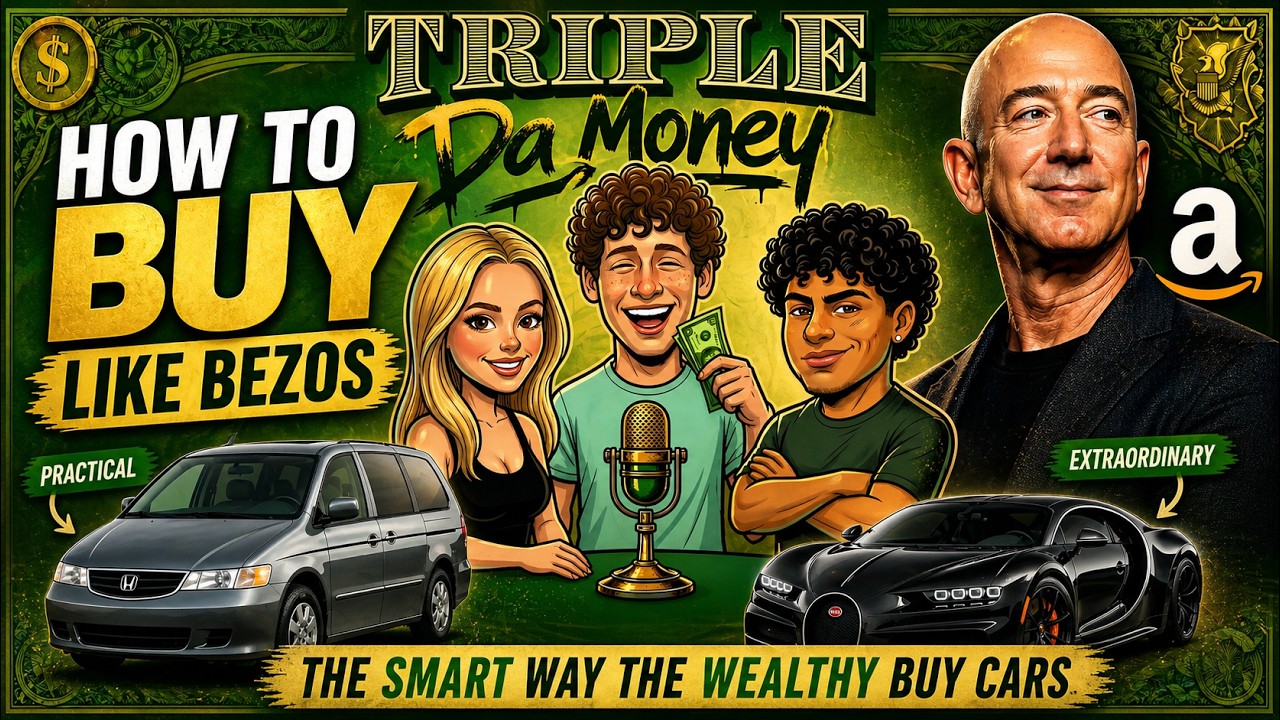
New Car vs. Used Car: What Nobody Tells You When You're Starting Out
New Car vs. Used Car: What Nobody Tells You When You're Starting Out
The Real Question to Ask Before Buying a Car
Why does the price tag matter less than most people think?
Because you are not spending money. You are spending hours of your life. At $15 an hour, a standard new car payment costs you around 96 hours of work every single month. That is before taxes, gas, or insurance. Just the payment.
The right question is not "can I afford this car?" It is "how many hours of my life is this worth?"
Depreciation: The Cost Nobody Talks About
What happens the moment you drive a new car off the lot?
It loses roughly 30% of its value immediately. Not over years. Right away. That is real money subtracted from your net worth the second you leave the dealership.
A used car already took that hit. Someone else paid for that depreciation. You get the car at the post-crash price.
The $40,000 Gap
How big is the actual difference between buying new and buying used?
In the example from this episode, the gap between a $60,000 new car and a $14,000 used car was over $40,000. Both cars do the same job. They get you where you are going.
That $40,000 is a down payment. It is years of travel. It is an investment account that starts compounding in your 20s instead of your 40s.
Insurance, Maintenance, and the Full Picture
Does insurance cost really change that much between new and used?
Yes. Insuring a $60,000 car costs significantly more than insuring a $14,000 one because the replacement cost is what drives the premium. The monthly payment is only part of what you are actually paying.
What about maintenance on used cars?
Used cars cost more to maintain over time. That is true. But the math still lands heavily in favor of used when you add up payments, insurance, and depreciation on a new one. You are comparing a higher maintenance bill against a much lower everything else.
Opportunity Cost: The Concept That Changes Everything
What is opportunity cost and why does it matter here?
Opportunity cost is what you give up by choosing one thing over another. Every dollar locked into a car payment is a dollar that is not invested, not saved, and not available when something goes wrong.
What happens if you lose your job with a big car payment?
You are stuck. You could lose the car and still owe money. A cheaper car gives you breathing room. Flexibility is worth more than most people realize until they need it.
What Wealthy People Actually Do
Do rich people drive expensive cars?
Some do, later in life, as a deliberate choice. But the pattern among people who built real wealth is different from what you see on social media. Warren Buffett drove a used car for years. Mark Zuckerberg is not known for a flashy car collection. Wealth gets built by making consistent smart decisions, not by looking wealthy while you are still building.
Social Media and the Pressure to Look Successful
Why do so many influencers seem to drive expensive cars?
A lot of it is rented, sponsored, or staged. The lifestyle you see online is often a product, not a reality. It is designed to look aspirational because aspiration drives engagement.
How does that affect younger buyers?
It creates pressure to signal success before you have built it. The car becomes a prop in a performance rather than a tool that serves your actual life. Recognizing that pattern is the first step to opting out of it.
The Practical Takeaway
What is the smartest approach to your first car?
Buy the most reliable used car you can afford outright or with the smallest possible payment. Keep it for as long as it runs. Use the difference between that choice and a new car payment to build something real: savings, investments, options.
Later, when you have built actual financial stability, buying a car you enjoy becomes a real choice instead of a financial trap dressed up as a reward.